
A Brief Ecclesiastical History of the Parish of Clashmore & Kinsalebeg
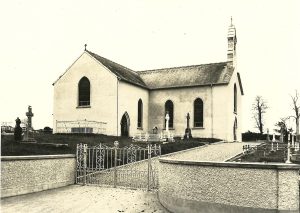
This year is the bicentennial anniversary of the building of St. Bartholomew’s Church in Piltown and next year the same milestone falls upon St. Cronan’s Church in Clashmore so for National Heritage Week 2025 we decided to take a closer look at these two beautiful buildings and some of the ancient religious sites in the parish which came before them.
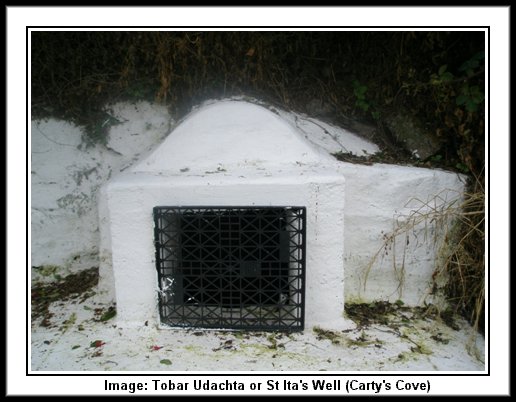
Some of the earliest church sites that we know of which existed around the parish were Kilmeedy (named for St. Ita), Kilgabriel, Kilmore, Kilmaloo (named for St. Molua) & Knockanaris (named for St. Columbderg), all of which are now untraceable on the ground (though some of the later ruined medieval sites were mapped on the earliest Ordnance Survey map in 1841). There are also several Holy Wells in the area, at least five in number – St. Mochua’s in Clashmore, St. Bartholomew’s in Piltown, St. Brigid’s at Ardsallagh, St. Columdearg’s at Knockaneris (which is now non-extant), and another known as Tobar Uachtha (the “Well of Penance”) on the townland of Monatray which is also reputedly named for St. Ita.
